Events

Seminar on Metal-Organic Frameworks (MOFs) by Professor Mohamed Eddaoudi – Thursday December 4th, 2025 at the University of Angers

As part of Yuliia Oleksii’s PhD defense scheduled for Friday December 5th 2025, Professor Mohamed Eddaoudi from King Abdullah University of Science and Technology (Saudi Arabia) will deliver a seminar on Metal-Organic Frameworks (MOFs).

📅 Date: Thursday, December 4, 2025 – 2:30 PM
📍 Location: Amphitheater L003, Faculty of Science, University of Angers


📄[ABSTRACT] Demand for functional materials targeted for specific applications is ever increasing as societal needs and demands mount with advancing technology. Evidently, improvement of existing materials and quest for new approaches to the design of novel materials are both valuable paths worth pursuing in order to address the myriad technological challenges that face us, pertaining to energy and environmental sustainability.

    Metal-organic frameworks (MOFs) are a unique class of solid-state materials amenable to design and manipulation for desired function and application, thanks to advancement in reticular chemistry and the various design strategies developed for its effective practice.1 Several design strategies have been conceived and developed to target viable MOF platforms, from the single-metal-ion molecular building block (MBB) approach to the hierarchical supermolecular building block and supermolecular building layer approaches (SBB and SBL, respectively) to the merged nets approach,2 and centering structure-directing agents (c-SDA) strategy.3 This inherent built-in information allows access to highly stabile and made-to-order porous materials, with controlled pore-aperture size and/or inner pore system functionality, toward applications pertaining to energy and environmental sustainability. Specifically, MOF materials addressing the energy-intensive separations and carbon capture will be highlighted, as well as insights into MOF based membranes, namely pure MOF membranes and mixed matrix membranes (MMMs), construction and their respective gas separation properties.4

  1. (a)- Guillerm, V., Jiang, H., Alezi, D., Alsadun, N., Eddaoudi, M. « From Elementary to Advanced Design of Functional Metal–Organic Frameworks: A User Guide to Deciphering the Reticular Chemistry Toolbox » Adv. Mater. 2414153 (2024). (b)- Jiang, H.; Alezi, D.; Eddaoudi, M., A reticular chemistry guide for the design of periodic solids. Nature Reviews Materials, 6 (6), 466-487 (2021).
  2. Jiang, H., Benzaria, S., Alsadun, N., Jia, J., Czaban-Józwiak, J., Guillerm, V., Shkurenko, A., Thiam, Z., Bonneau, M., Maka, V.K., Chen, Z., Ameur, Z.O., O’Keeffe, M., Eddaoudi, M. « Merged-nets enumeration for the systematic design of multicomponent reticular structures » Science 386 (6722), 659–666 (2024).
  3. Barsukova, M.; Sapianik, A.; Guillerm, V.; Shkurenko, A.; Shaikh, A.C.; Parvatkar, P.; Bhatt, P.; Bonneau, M.; Alhaji, A.; Shekhah, O.; Balestra, S.R.G.; Semino, R.; Maurin, G.; Eddaoudi, M. « Face-directed assembly of tailored isoreticular MOFs using centring structure-directing agents. » Nat. Synth. 3, 33-46 (2024).
  4. (a)- Zhou, S.; Shekhah, O.; Ramírez, A.; Lyu, P.; Abou-Hamad, E.; Jia, J.; Li, J.; Bhatt, P.; Huang, Z.; Jiang, H.; Jin, T.; Maurin, G.; Gascon, J.; Eddaoudi, M.Asymmetric pore windows in MOF membranes for natural gas valorization. Nature 606706–712 (2022). (b)-Datta, S.; Mayoral, A.; Bettahalli, S.; Bhatt, P.; Karunakaran, M.; Carja, D.; Fan, D.; Mileo, P.; Semino, R.; Maurin, G.; Terasaki, O.; Eddaoudi, M., Rational design of mixed-matrix metal-organic framework membranes for molecular separations. Science, 376 (6597) 1080-1087 (2022).  

📄[BIOGRAPHY] Professor Mohamed Eddaoudi is an Ibn Alhaythamen Distinguished Professor of Chemical Sciences and Chair of the Advanced Membranes and Porous Materials (AMPM) Center at King Abdullah University of Science and Technology (KAUST), Saudi Arabia.

Professor Mohamed Eddaoudi is a pioneer in the chemistry of metal-organic frameworks (MOFs), designing and introducing new strategies for reticular chemistry, rational design, and construction of functional solid-state materials. His work focuses on the design and synthesis of functional porous solids for energy and environmental sustainability: hydrogen storage, methane storage, CO₂ capture, and direct air capture (DAC). He also designs and synthesizes functional adsorbents and membranes, enabling energy-efficient and cost-effective gas separations.

  • Master’s and Ph.D. in Chemistry, Denis Diderot University (Paris VII), France
  • Associate Editor: Chemical Science, IUCrJ
  • Editorial Board Member: JACS, JMCA
  • Fellow of the Royal Chemical Society (FRSC)
  • Member: ACS, MRS, SASTA
  • Kuwait Prize in Chemistry (2024)
  • Almarai Award for Distinguished Scientists (2020)
  • Abdul Hameed Shoman Award for Arab Researchers (2019)
  • University Research Excellence Awards (2004, 2007)
  • Chemistry Teaching Excellence Awards (2005, 2008)
  • Highly Cited Researcher (2014–2025)
  • Listed among the world’s most influential scientific minds (2014)
  • Lifetime Member, The World Academy of Sciences (effective January 2026)
  • 150+ invited lectures
  • 350+ publications
  • 105,000+ citations

Seminar on Metal-Organic Frameworks (MOFs) by Professor Mohamed Eddaoudi – Thursday December 4th, 2025 at the University of Angers Read More »

Looking Back at the Summer School 2025 “Light Matters” at the University of Angers

From 23rd to 27th June 2025, the Graduate School EUR Lumomat organised the second edition of its Summer School at the University of Angers on the theme « Light matters: exploring photochemistry and photophysics from basics to breakthroughs » .

A week of in-depth exploration of photochemistry and photophysics with leading researchers in their fields

The Light Matters Summer School offered an in-depth journey through photochemistry and photophysics from basics to breakthroughs, specially designed for PhD students in chemistry, physics, materials science and related fields, keen to broaden their knowledge and engage with cutting-edge applications.

The multidisciplinary program bridged the gap between fundamental concepts and innovative research, enabling participants to gain a comprehensive understanding of light-induced processes and their transformative potential in science and technology.

This week was as enriching on a human level as it was scientifically. Twelve researchers and university professors from all over the world gave lectures and practicals sessions.

The scientific coordination of the program was ensured by three EUR Lumomat coordinators, each representing one of the project’s partner sites: Piétrick Hudhomme (Université d’Angers, Laboratoire Moltech Anjou), Stéphane Diring (Nantes Université, Laboratoire CEISAM), and Olivier Galangau (Université de Rennes, Institut des Sciences Chimiques de Rennes ).

It was a great success with 27 enrolled PhD students between 23 and 29 years old from 10 different countries : France, Azerbaijan, Morocco, China, Taiwan, Colombia, Italy, India, Norway and Ukraine. They explored the fascinating interactions between light and matter, from fundamental science to innovative applications.

The Summer School “ Light Matters” Planning

During this week, participants attended nine lectures by international experts and took part in various practicals sessions, as well as social events aimed at fostering connections among young PhD students. They also participated in flash presentations and poster sessions to present their research projects.

The EUR Lumomat was delighted to welcome eight internationally renowned researchers to work with doctoral students on the « Light Matters » theme (see below).

This second edition was a real success, and a third Summer school is already planned for 2027.

Discover the eight invited speakers and their lectures from the Summer School

Prof. Ewen BODIO - Nantes University

Ewen Bodio

Professor of Molecular Chemistry and Bioinorganic Chemistry

CEISAM Laboratory, Nantes University, France

Dr Bodio’s Summer School lecture:Optical imaging: from fluorescent molecules to guided surgery. »

Pr. Ewen Bodio is a Professor of Molecular and Bioinorganic Chemistry at the CEISAM Laboratory at Nantes University and junior member of IUF. His research focuses on the design of metal complexes and fluorescent molecules, with applications in medical imaging and therapy. These applications range from diagnostics of various diseases to monitoring chemotherapy and developing photo-activatable treatments, themes he began exploring during his tenure at ICMUB in Dijon. Pr. Bodio is advancing research on the development of near-infrared-emitting molecular probes. These probes are designed to make tumors fluorescent, thereby significantly aiding surgeons by making it easier to visualize malignant tissues. This innovation is expected to considerably reduce cancer-related side effects and recurrences.

Paola CERONI

Full Professor in Chemical Sciences

— Departement of Chemistry Ciamician, University of Bologna, Italy

Prof. Ceroni’s Summer School lectures:Photochemistry and photocatalysis: Insights into the photochemical mechanism » and « Light-harvesting antennae based on luminescent quantum dots »

In 1998, Prof. Paola Ceroni obtained her PhD in Chemical Sciences at the University of Bologna, following a research period in the United States (Prof. Allen J. Bard’s laboratory). Her research focuses on photoactive molecules, supramolecular systems, and nanocrystals for photocatalysis, artificial photosynthesis, and luminescent materials. Her work on luminescent silicon nanocrystals has been supported by ERC StG PhotoSi and ERC PoC SiNBiosys grants. She is also Associate Editor of Dalton Transactions (RSC).

Murielle CHAVAROT-KERLIDOU

CNRS Director of Research and deputy of the French Solar Fuels Network

— Laboratoire de Chimie et de Biologie des Métaux, Grenoble Alpes University/CNRS/CEA, France

Dr. Chavarot-Kerlidou’s Summer School lecture:Current challenges in molecular artificial photosynthesis. »

Dr Murielle Chavarot-Kerlidou is CNRS Director of Research and deputy Director of the French Solar Fuels Network. She received her PhD in Molecular Chemistry from the Université Grenoble Alpes (1998). She became CNRS researcher in 2002 and joined the Laboratoire de Chimie et Biologie des Métaux (Grenoble, France) in 2009 to develop new projects in the field of artificial photosynthesis. Her current research activities include the study of bio-inspired cobalt catalysts for hydrogen production, the design of molecular systems for photo-induced charge accumulation and the development of dye-sensitized photocathodes for the production of solar fuels.

Sami LAKHDAR

CNRS Director of Research

— University of Toulouse III/CNRS, France

Dr. Lakhdar’s Summer School lecture:Advancing photocatalytic reactions for sustainable chemistry. »

Dr. Sami Lakhdar is a Research Director at the CNRS in the Laboratory of Fundamental and Applied Heterochemistry at the University Paul Sabatier in Toulouse. He obtained his PhD in 2006 from the Universities of Versailles and Monastir, focusing on the reactivity of nitrobenzofuroxanes. Afterward, he worked as a postdoctoral fellow in Professor H. Mayr’s group at Ludwig Maximilians University in Munich and became a research associate at the CNRS at the Laboratoire de Chimie Moléculaire et Thio-organique in Caen in 2013. His research focuses on organic chemistry, particularly organocatalysis, photocatalysis, and organic physical chemistry, with a specific interest in organic reactivity and the development of visible-light-mediated carbon-heteroatom bond formation reactions.

Adèle D. LAURENT

CNRS Director of Research

— CEISAM Laboratory/CNRS (Nantes University, France)

Dr. Laurent’s Summer School lecture:Investigating excited states in embedded media: A computational approach. »

In 2007, Dr Adèle D. LAURENT earned a Master’s degree in Chemistry in Namur. Then she moved to Nancy to complete a PhD in Theoretical and Computational Chemistry, focusing on multi-scaling approaches. Afterward, she spent two years at the University of Southern California for a postdoctoral position. Since 2012 she has been a CNRS researcher at CEISAM Laboratory (Nantes University), and in 2023, she was appointed Director of Research at CNRS. As a computational chemist, her expertise spans from quantum chemistry to molecular modeling. She is particularly interested in studying light-molecule or macromolecule interactions using multi-scaling approaches to simulate optical properties of embedded dyes or photochromes. Coordinator of several regional and national projects, she authored more than 100 peer-reviewed articles, one book chapter and 2 patents.

Stefan MESKERS

Associate professor

— Molecular Materials and Nanosystems group (Endhoven University of Technology, Netherlands)

Prof. Meskers’s Summer School lecture:Fundamentals of Circular Dichroism (CD) and Circular Polarization of Luminescence (CDL). »

Workshop: Good practices for CD and CPL on solution, film

Stefan Meskers is associate professor in the Molecular Materials and Nanosystems group at Endhoven University of Technology. He studied Chemistry at Leiden University where he obtained his MSc degree in 1992. In 1997, he obtained his PhD at the same university under supervision of Harry Dekkers with his thesis on spectroscopy with circularly polarized light to probe binding of small chiral molecules to proteins. He was a postdoctoral researcher at the Université Libre de Bruxelles with Prof. Jean-Marie Ruysschaert for the remainder of the year, after which he moved to Eindhoven University of Technology (TU/e) for a postdoc project with professors Bert Meijer and Joachim Wolter. In 1999 and 2001 he was a postdoc at the Philipps Universität Marburg (Germany) with Heinz Bäßler, where he became deeply interested in the optical properties of molecular semiconductors and organic electronics. In 2001 he returned to TU/e to work at the Laboratory of Macromolecular and Organic Chemistry of Prof. René Janssen, on a postdoctoral fellowship from the Royal Dutch Academy of Arts and Sciences. In 2003 he was appointed Assistant Professor at the same group.

François RIOBÉ

Researcher

— Institute of Chemistry of Condensed Matter of Bordeaux (Université de Bordeaux, France)

Dr. Riobé’s Summer School lecture:Luminescence measurements: Principles and guidelines. »

Workshop: How to measure quantum yields?

François Riobé is a chemist who earned a Ph.D. from the University of Angers (France) in 2009. After postdoctoral positions in ICMAB (Barcelona, Spain) and ISCR (Rennes, France), he joined the CNRS in 2013 as a researcher in the Chemistry Laboratory of the ENS Lyon. There, he focused on the various potential applications of luminescent lanthanide complexes. In late 2022, he moved to the Institute of Chemistry of Condensed Matter of Bordeaux (France), where he pursues his research in the field of materials science.

René WILLIAMS

Associate Professor

— Molecular Photonics group at the Van’t Hoff Institute for Molecular Sciences (HIMS), (University of Amsterdam, Netherlands)

Dr. Williams’s Summer School lecture:Photochemistry of photodynamic (anti-cancer) therapy: Singlet oxygen and triplet excited states

Dr. René M. Williams is an Associate Professor in the Molecular Photonics group at the Van ‘t Hoff Institute for Molecular Sciences (HIMS) at the University of Amsterdam, where he obtained his PhD in 1996, focusing on fullerenes and electron transfer. He pursued postdoctoral research at the Max Planck Institute in Mülheim and Columbia University, studying opto-acoustics and triplet sensitization. His research explores light-matter interactions in photoactivated (nano)hybrid materials for energy and healthcare applications, focusing on photoinduced electron and energy transfer in molecular, supramolecular, and nanosystems. He works on thin-film solar cells, perovskite doping, and near-infrared-activated photodynamic therapy materials for cancer treatment.

Looking Back at the Summer School 2025 “Light Matters” at the University of Angers Read More »

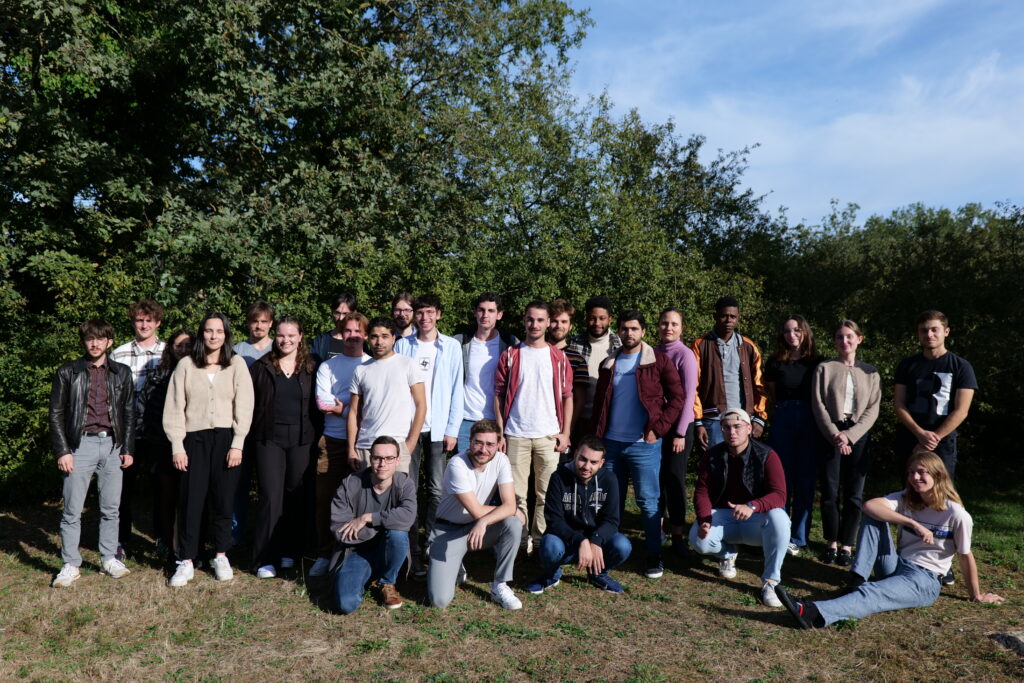
Groupe des Masters 1 et 2 Lumomat Intégration 2025

Journée d’intégration des étudiantes et étudiants du Master de chimie Lumomat Septembre 2025

Une journée d’intégration pour les Masters Lumomat à l’Institut des Sciences Chimiques de Rennes

Le vendredi 12 septembre 2025 a eu lieu la journée d’intégration pour les étudiantes et étudiants du Master de chimie Lumomat, au sein de l’Institut des Sciences Chimiques de Rennes, un de nos quatre laboratoires partenaires. La matinée fut rythmée par la présentation de l’Ecole Universitaire de Recherche Lumomat par Muriel Hissler, co-directrice du programme au sein de l’Université de Rennes et celle de l’Institut des Sciences Chimiques de Rennes par son directeur Marc Fourmigué.

Arnaud Fihey, Maitre de Conférence à l’ISCR, a pu partager ses recherches auprès des étudiants lors d’une conférence intitulée « Contribution of Molecular Modelling to research in Light-Matters Interactions – Contribution de la modélisation moléculaire dans la recherche en Interactions Lumière-Matières »

Ce fut aussi une opportunité donnée aux étudiantes et étudiants de découvrir les parcours inspirants de 4 diplômés de Lumomat afin de leur permettre de se projeter dans leur avenir. Un grand merci pour leurs témoignages à :

  • Elodie Dureau – Doctorante à l’Institut des Sciences Chimiques de Rennes
  • Bruce Mioko Deme – Ingénieur en Recherche & Développement à Arc en Ciel Sérigraphie
  • Kelvine Letellier – Doctorant à l’Institut des Sciences Chimiques de Rennes
  • Raphaël Burban – Responsable de projet chez Phone recycle Solution – Ingénieur en Physico-Chimie des Matériaux

Pour finir une partie d’Escape Game à Escape Yourself Rennes a permis aux étudiantes et étudiants de Master 1 et 2 de se rencontrer et tisser des liens.

Bonne rentrée à toutes et tous !


Integration day for Lumomat Master’s students at the Rennes Institute of Chemical Sciences

On Friday September 12, took place the integration day for the Master’s students in Chemistry Lumomat at the Rennes institute of Chemical Sciences, one of our partner laboratories. Muriel Hissler, co-director of the Lumomat Graduate School introduced the Lumomat Program and Marc Fourmigué presented the Rennes institute of Chemical Sciences.

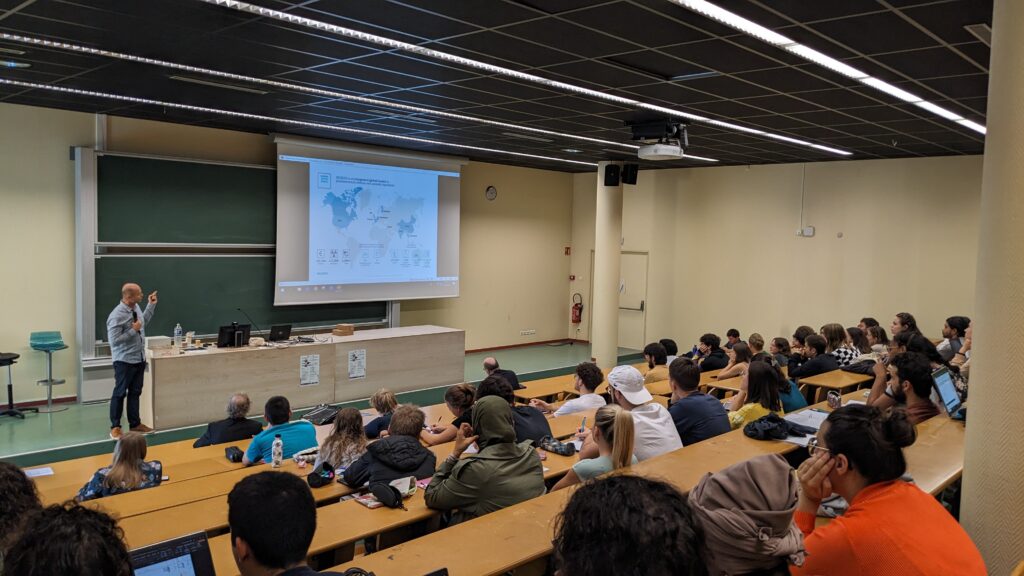
Arnaud Fihey, assistant professor at the ISCR, shared his researches to the students with a lecture called « Contribution of Molecular Modelling to research in Light-Matters Interactions »

It was an opportunity for students to discover inspiring professional careers with 4 Lumomat’s graduates. Many thanks again for their testimonials: 

  • Elodie Dureau – PhD student at the Rennes institute of Chemical Sciences
  • Bruce Mioko Deme – R&D engineer at Arc en Ciel Sérigraphie
  • Kelvine Letellier – PhD student at the Rennes institute of Chemical Sciences
  • Raphaël Burban – Project Manager at Phone recycle Solution

At the end of the day, escape rooms missions gathered 1st and 2nd years’ Master students for making connections.

Journée d’intégration des étudiantes et étudiants du Master de chimie Lumomat Septembre 2025 Read More »

Summer School “Light Matter: Exploring photochemistry and photophysics from basics to breakthroughs”: register now!

From 23rd to 27th June 2025, EUR Lumomat is organising the second edition of its Summer School at the University of Angers on the theme « Light matters: exploring photochemistry and photophysics from basics to breakthroughs » . Registration, reserved for doctoral students and professionals in chemistry, physics, materials science and related fields, is open until 13 April!

A week of in-depth exploration of photochemistry and photophysics with leading researchers in their fields

The Light Matters Summer School offers an in-depth journey exploring photochemistry and photophysics from basics to breakthroughs and specially designed for PhD students in chemistry, physics, materials science and related fields, keen to broaden their knowledge and engage with cutting-edge applications. The multidisciplinary program bridges the gap between fundamental concepts and innovative research, enabling participants to gain a comprehensive understanding of light-induced processes and their transformative potential in science and technology. Join us as we explore the fascinating interaction between light and matter, from fundamental science to innovative applications.

Discover the eight invited speakers of the Summer School

The EUR Lumomat is delighted to welcome eight internationally renowned researchers to work with doctoral students on the « Light Matters » theme.

Prof. Ewen BODIO - Nantes University, France

Ewen Bodio

Professor of Molecular Chemistry and Bioinorganic Chemistry

CEISAM Laboratory, Nantes University, France

Dr Bodio’s Summer School lecture:Optical imaging: from fluorescent molecules to guided surgery. »

Pr. Ewen Bodio is a Professor of Molecular and Bioinorganic Chemistry at the CEISAM Laboratory at Nantes University and junior member of IUF. His research focuses on the design of metal complexes and fluorescent molecules, with applications in medical imaging and therapy. These applications range from diagnostics of various diseases to monitoring chemotherapy and developing photo-activatable treatments, themes he began exploring during his tenure at ICMUB in Dijon. Pr. Bodio is advancing research on the development of near-infrared-emitting molecular probes. These probes are designed to make tumors fluorescent, thereby significantly aiding surgeons by making it easier to visualize malignant tissues. This innovation is expected to considerably reduce cancer-related side effects and recurrences.

Paola CERONI

Full Professor in Chemical Sciences

— Departement of Chemistry Ciamician, University of Bologna, Italy

Prof. Ceroni’s Summer School lectures:Photochemistry and photocatalysis: Insights into the photochemical mechanism » and « Light-harvesting antennae based on luminescent quantum dots »

In 1998, Prof. Paola Ceroni obtained her PhD in Chemical Sciences at the University of Bologna, following a research period in the United States (Prof. Allen J. Bard’s laboratory). Her research focuses on photoactive molecules, supramolecular systems, and nanocrystals for photocatalysis, artificial photosynthesis, and luminescent materials. Her work on luminescent silicon nanocrystals has been supported by ERC StG PhotoSi and ERC PoC SiNBiosys grants. She is also Associate Editor of Dalton Transactions (RSC).

Murielle CHAVAROT-KERLIDOU

CNRS Director of Research and deputy of the French Solar Fuels Network

— Laboratoire de Chimie et de Biologie des Métaux, Grenoble Alpes University/CNRS/CEA, France

Dr. Chavarot-Kerlidou’s Summer School lecture:Current challenges in molecular artificial photosynthesis. »

Dr Murielle Chavarot-Kerlidou is CNRS Director of Research and deputy Director of the French Solar Fuels Network. She received her PhD in Molecular Chemistry from the Université Grenoble Alpes (1998). She became CNRS researcher in 2002 and joined the Laboratoire de Chimie et Biologie des Métaux (Grenoble, France) in 2009 to develop new projects in the field of artificial photosynthesis. Her current research activities include the study of bio-inspired cobalt catalysts for hydrogen production, the design of molecular systems for photo-induced charge accumulation and the development of dye-sensitized photocathodes for the production of solar fuels.

Sami LAKHDAR

CNRS Director of Research

— University of Toulouse III/CNRS, France

Dr. Lakhdar’s Summer School lecture:Advancing photocatalytic reactions for sustainable chemistry. »

Dr. Sami Lakhdar is a Research Director at the CNRS in the Laboratory of Fundamental and Applied Heterochemistry at the University Paul Sabatier in Toulouse. He obtained his PhD in 2006 from the Universities of Versailles and Monastir, focusing on the reactivity of nitrobenzofuroxanes. Afterward, he worked as a postdoctoral fellow in Professor H. Mayr’s group at Ludwig Maximilians University in Munich and became a research associate at the CNRS at the Laboratoire de Chimie Moléculaire et Thio-organique in Caen in 2013. His research focuses on organic chemistry, particularly organocatalysis, photocatalysis, and organic physical chemistry, with a specific interest in organic reactivity and the development of visible-light-mediated carbon-heteroatom bond formation reactions.

Adèle D. LAURENT

CNRS Director of Research

— CEISAM Laboratory/CNRS (Nantes University, France)

Dr. Laurent’s Summer School lecture:Investigating excited states in embedded media: A computational approach. »

In 2007, Dr Adèle D. LAURENT earned a Master’s degree in Chemistry in Namur. Then she moved to Nancy to complete a PhD in Theoretical and Computational Chemistry, focusing on multi-scaling approaches. Afterward, she spent two years at the University of Southern California for a postdoctoral position. Since 2012 she has been a CNRS researcher at CEISAM Laboratory (Nantes University), and in 2023, she was appointed Director of Research at CNRS. As a computational chemist, her expertise spans from quantum chemistry to molecular modeling. She is particularly interested in studying light-molecule or macromolecule interactions using multi-scaling approaches to simulate optical properties of embedded dyes or photochromes. Coordinator of several regional and national projects, she authored more than 100 peer-reviewed articles, one book chapter and 2 patents.

Stefan MESKERS

Associate professor

— Molecular Materials and Nanosystems group (Endhoven University of Technology, Netherlands)

Prof. Meskers’s Summer School lecture:Fundamentals of Circular Dichroism (CD) and Circular Polarization of Luminescence (CDL). »

Workshop: Good practices for CD and CPL on solution, film

Stefan Meskers is associate professor in the Molecular Materials and Nanosystems group at Endhoven University of Technology. He studied Chemistry at Leiden University where he obtained his MSc degree in 1992. In 1997, he obtained his PhD at the same university under supervision of Harry Dekkers with his thesis on spectroscopy with circularly polarized light to probe binding of small chiral molecules to proteins. He was a postdoctoral researcher at the Université Libre de Bruxelles with Prof. Jean-Marie Ruysschaert for the remainder of the year, after which he moved to Eindhoven University of Technology (TU/e) for a postdoc project with professors Bert Meijer and Joachim Wolter. In 1999 and 2001 he was a postdoc at the Philipps Universität Marburg (Germany) with Heinz Bäßler, where he became deeply interested in the optical properties of molecular semiconductors and organic electronics. In 2001 he returned to TU/e to work at the Laboratory of Macromolecular and Organic Chemistry of Prof. René Janssen, on a postdoctoral fellowship from the Royal Dutch Academy of Arts and Sciences. In 2003 he was appointed Assistant Professor at the same group.

François RIOBÉ

Researcher

— Institute of Chemistry of Condensed Matter of Bordeaux (Université de Bordeaux, France)

Dr. Riobé’s Summer School lecture:Luminescence measurements: Principles and guidelines. »

Workshop: How to measure quantum yields?

François Riobé is a chemist who earned a Ph.D. from the University of Angers (France) in 2009. After postdoctoral positions in ICMAB (Barcelona, Spain) and ISCR (Rennes, France), he joined the CNRS in 2013 as a researcher in the Chemistry Laboratory of the ENS Lyon. There, he focused on the various potential applications of luminescent lanthanide complexes. In late 2022, he moved to the Institute of Chemistry of Condensed Matter of Bordeaux (France), where he pursues his research in the field of materials science.

René WILLIAMS

Associate Professor

— Molecular Photonics group at the Van’t Hoff Institute for Molecular Sciences (HIMS), (University of Amsterdam, Netherlands)

Dr. Williams’s Summer School lecture:Photochemistry of photodynamic (anti-cancer) therapy: Singlet oxygen and triplet excited states

Dr. René M. Williams is an Associate Professor in the Molecular Photonics group at the Van ‘t Hoff Institute for Molecular Sciences (HIMS) at the University of Amsterdam, where he obtained his PhD in 1996, focusing on fullerenes and electron transfer. He pursued postdoctoral research at the Max Planck Institute in Mülheim and Columbia University, studying opto-acoustics and triplet sensitization. His research explores light-matter interactions in photoactivated (nano)hybrid materials for energy and healthcare applications, focusing on photoinduced electron and energy transfer in molecular, supramolecular, and nanosystems. He works on thin-film solar cells, perovskite doping, and near-infrared-activated photodynamic therapy materials for cancer treatment.

Practical information about the Summer School

The « Light Matters » Summer School will take place at the Faculté des Sciences of the University of Angers, in Angers, France.

Address:

Moltech Anjou, Bâtiment K
University of Angers – Faculty of Science
2 Boulevard de Lavoisier
49000 Angers
FRANCE

The summer school program includes lectures by leading experts, practical workshops on (chiro)optics and interactive sessions designed to equip students with both theoretical knowledge and practical tools. Participants will also benefit from networking opportunities to encourage cross-disciplinary collaboration, with the chance to each to present a poster and a flash oral communication related to their PhD research works.

The final schedule will be display soon!

This program is designed for PhD students in chemistry, physics, materials science and related fields.

Citizens of all countries in the world are eligible to apply (not younger than 18 years old).

The Summer School is taught entirely in English.

Register for the Summer School before 13th April*

Applications for the Light Matters Summer School are open until 13 April.

Participation fee:

  • Students from partner universities: 500 EUR
  • Students from non-partner universities: 600 EUR
  • Professionals: 1,000 EUR

Fees include welcoming and teaching materials, accommodation in a double room (2 students), coffee breaks and weekday lunches, social activities, transport pass and all costs related to scientific visits.

The Summer Schools do not cover the costs of passports, visas, health insurance, travel to and from Angers, dinners and breakfasts.

If you are a student from the University of Angers, Nantes or Rennes, please contact summerschools@univ-angers.fr 

*Subject to availability : there are 30 spots available for this program, assigned on a first-come, first-served basis.

To keep up to date with Summer School news, follow us on our social networks (LinkedIn, instagram, Facebook, BlueSky)!

ℹ️ If you have any questions, please don’t hesitate to contact us by email: eur-lumomat@univ-angers.fr
Summer School “Light Matter: Exploring photochemistry and photophysics from basics to breakthroughs”: register now! Read More »

Journée d’intégration Master LUMOMAT 2023

the jeudi 5 octobre s’est déroulée la première édition de la journée d’intégration des étudiants de Master LUMOMAT 2023 à Angers.

Cette journée était l’occasion pour nos étudiants multisites (Angers, Nantes et Rennes) de se rencontrer autour de moments conviviaux.

L’évènement a débuté en milieu d’après midi, pour finir tard dans la soirée. Au programme, présentation de LUMOMAT, parrainages, photos de promos, et l’activité surprise : un Escape Game sur le thème du FBI suivi d’un buffet cocktail.

Les étudiants ont ensuite poursuivi leur soirée en profitant de la vie nocturne d’Angers.

Journée d’intégration Master LUMOMAT 2023 Read More »

Journée d’insertion professionnelle 2023

the mardi 19 septembre s’est déroulée la toute première édition de la journée d’insertion professionnelle LUMOMAT.

Cette journée était l’occasion pour nos étudiants du Master LUMOMAT, ainsi que pour des étudiants de licence chimie/physique de l’Université d’Angers, de découvrir le parcours et l’activité de différents acteurs professionnels du domaine de la chimie.

Parmi ces acteurs, 4 intervenants du monde industriels : Pierre-Antoine BONNARDEL de SEQENS, Romain FUTSCH de Luchrome, Jean-Marie VAU de l’AFELIM, ainsi qu’un de nos étudiants LUMOMAT en thèse CIFRE, Benjamin LANGLAIS de Martin Technologies.

4 de nos doctorants LUMOMAT, Korentin MORICE, Axel HOUSSIN, Louis HARDOIN and Romain GUECHAICHIA ont pour leur part présenté leur parcours étudiant ainsi que leur actuel projet de thèse.

photo_presentation_doctorants_lumomat
Présentation de nos 4 doctorants LUMOMAT

C’était également l’occasion pour la cheffe de projets LUMOMAT Noemie BARBOT de présenter l’EUR et ses avantages aux étudiants.

La journée s’est terminée par une table ronde autour des métiers de la chimie, pendant laquelle les étudiants ont pu poser leurs questions aux différents intervenants. Un quiz Wooclap était également organisé, l’occasion pour les étudiants de s’affronter autour de leur cultures générales sur les métiers de la chimie.

Journée d’insertion professionnelle 2023 Read More »

Conférences MOLTECH Anjou – 15 mai

Dr. Erwan Nicol et Dr. Olivier Colombani de l’IMMM présenteront leurs travaux à travers deux conférences, qui auront lieu dans l’amphithéâtre L003.

  • 11h00-11h30 : Erwan Nicol, “Hydrogels auto-assemblés photo-réticulables à base de poly(éthylène glycol) (PEG) : un potentiel applicatif en biologie
  • 11h30-12h00 : Olivier Colombani, “Homogeneous, Janus and stimuli-responsive supramolecular nanocylinders via hydrogen bonding polymers in solution”

Conférences MOLTECH Anjou – 15 mai Read More »

Conférence CEISAM – 15 mai

Ally Aukauloo (Université Paris-Saclay) donnera une conférence le lundi 15 mai à 15h15 salle Marie Curie.

Le sujet de sa conférence portera sur: « Organic semiconductors and molecular complexes for artificial photosysnthesis ».

« Artificial photosynthesis aims to reproduce the catalytic power of enzymes from the capture of sunlight to strip electrons and protons from water to reduce CO2 or uses light to activate O2 to perform oxidation chemistry in a selective way. I will discuss on our recent results in these research thrusts:
i) Organic semiconductors for the water splitting reaction
ii) CO2 to CO transformation with iron porphyrins catalysts

While often trapping intermediates following chemical and electrochemical pathways are tedious, using a photoredox module to interrogate the light driven activation processes can be alternative and elegant route.

Conférence CEISAM – 15 mai Read More »

MOLTECH ANJOU Seminar

Gloria Cardenas-Jiron, Laboratory of Theoretical Chemistry, Faculty of Chemistry and Biology, UNIVERSITY OF SANTIAGO DE CHILE (USACH), CHILE will give a lecture at the University of Angers

NEW INSIGHTS INTO PORPHYRIN AND EXPANDED PORPHYRINS AS LIGHT HARVESTERS FOR DYE-SENSITIZED SOLAR CELLS (DSSC)“.

Date and place: Wednesday March 22 at 11:00 a.m. in auditorium L004

Summary:

“Expanded porphyrins are macrocycles containing more than four pyrrole rings with an enhancement of the p-electron conjugation. Because of the larger number of pyrrole rings compared with porphyrins, they have attracted great interest in dye-sensitized solar cells (DSSC).

Photophysical, photovoltaics, and charge transport properties of porphyrin and expanded porphyrins are inspected using density functional theory (DFT), time-dependent DFT, and a combination of the Keldysh nonequilibrium Green′s function formalism with the DFT (DFT-NEGF). Several strategies in the molecular structure are assessed, and their effects on these properties are investigated.

Acknowledgments. We thank the financial support of ANID/CHILE under Project FONDECYT 1221072 (GC-J.) and Project ECOS-Chile (GC-J.) and ECOSUD-France (Fabrice Odobel) C19E03. Powered@NLHPC: This research was partially supported by the supercomputing infrastructure of the NLHPC (ECM-02) of the University of Chile. »

MOLTECH ANJOU Seminar Read More »

See our LUMOMAT academic brochure

X
en_GB